
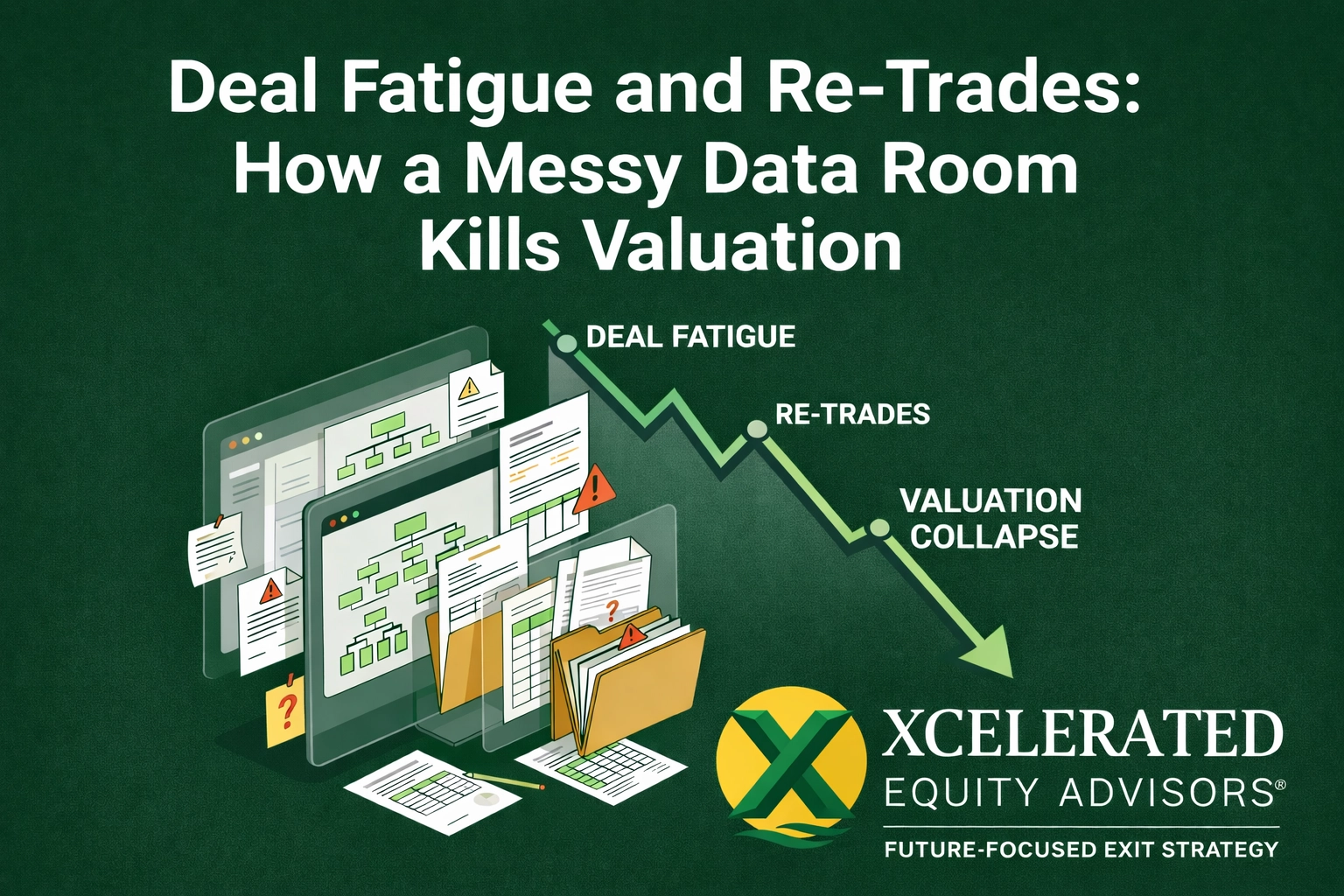

The transition from a Letter of Intent to a definitive purchase agreement is the most volatile period in the lifecycle of a business sale. During this phase, the seller’s primary objective is to maintain momentum and preserve the valuation established during the initial offer. However, many owners overlook the critical infrastructure that must be built well before going to market: the virtual data room. Increasing enterprise value before a transaction, not during one, is the operating discipline that protects price and terms when diligence begins.
A disorganized data room is more than a clerical inconvenience; it is a direct threat to enterprise value. When documentation is missing, inconsistent, or slow to materialize, it signals operational immaturity to the buyer. This lack of preparation creates structural delays that invite deal fatigue and empower the buyer to initiate aggressive re-trades. I’ve sat across the table from buyers who ran this exact playbook. They do not need a catastrophic issue to cut price. They need friction, delay, and enough uncertainty to reframe risk.
For the sophisticated investor, a messy data room is a strategic opportunity to compress valuation multiples. Every missing document or delayed response provides a narrative for the buyer to argue that the risk profile of the business is higher than originally represented. In the institutional M&A environment, information transparency is the only currency that maintains leverage.
The Psychology of Deal Fatigue
Deal fatigue is a persistent risk factor in mid-market transactions. It occurs when negotiations extend beyond the anticipated timeline, leading to psychological and operational exhaustion across the deal team. As the process drags on, the enthusiasm that drove the initial offer begins to evaporate, replaced by skepticism and frustration.
In my experience, deal fatigue is common whenever diligence turns reactive instead of controlled. During these delays, the seller’s management team is forced to redirect focus from daily operations to administrative firefighting. This diversion often weakens current performance, which gives buyers fresh support for price reductions and tougher terms.
As fatigue sets in, the seller's resolve weakens. The emotional toll of a protracted process often forces owners to accept concessions they would have rejected at the start of the deal. At that point, the priority shifts from maximizing value to simply ending the ordeal, resulting in significant equity being left on the table.

Mechanics of the Buyer Re-Trade
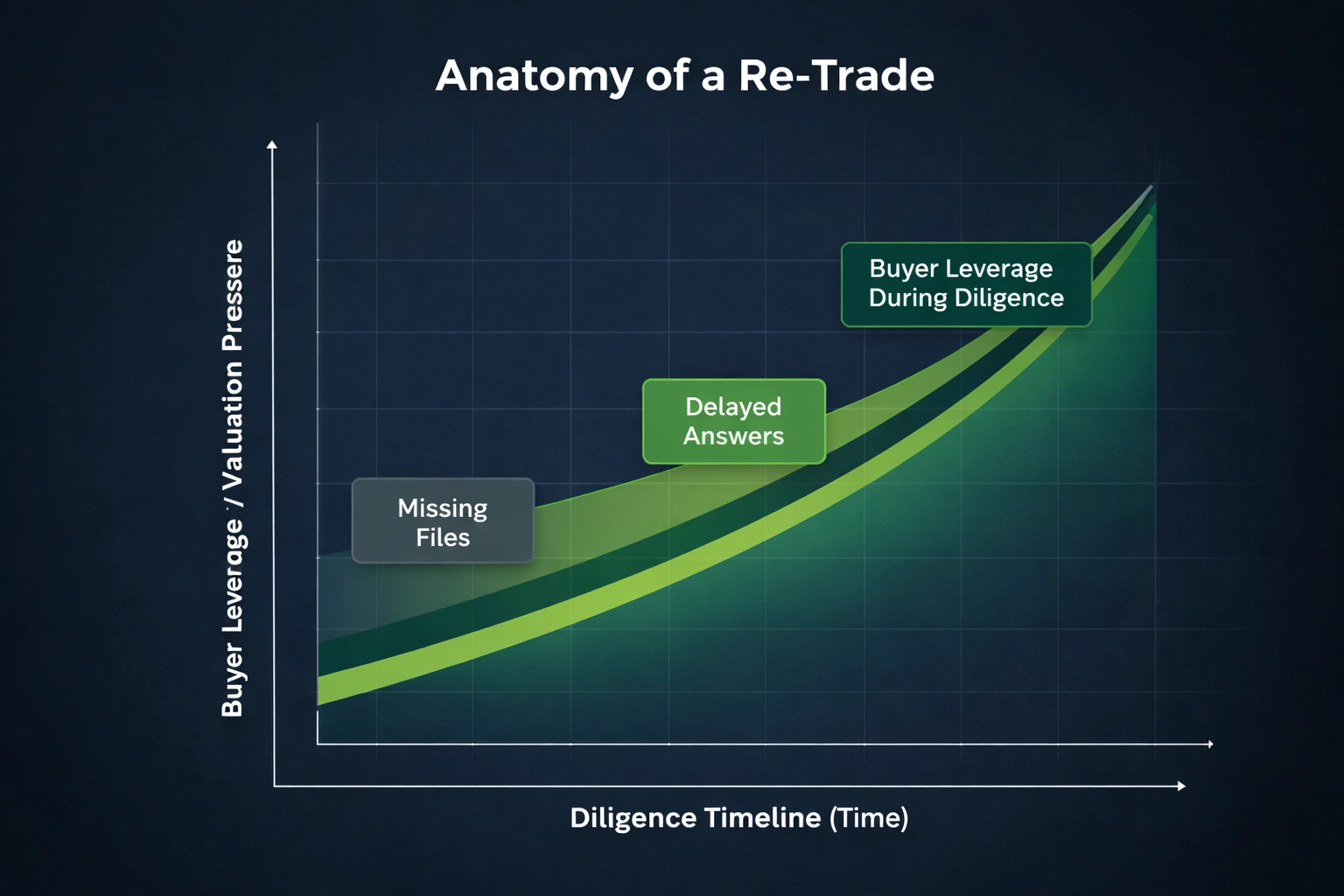
The re-trade is a maneuver where a buyer reduces their offer price or alters deal terms after the Letter of Intent has been signed. While some re-trades are based on genuine discoveries during diligence, many are the direct result of "information friction" caused by poor data room preparation.
When a buyer encounters a disorganized data room, they perceive a lack of control within the organization. They assume that if the financial and legal records are chaotic, the underlying operations are likely plagued by similar inefficiencies. This perceived risk is immediately priced into a revised offer, often disguised as an "adjustment for unforeseen contingencies."
In my experience, buyers use silence as a weapon. They slow responses, repeat requests, and let uncertainty compound inside the seller’s camp. Once the seller is cognitively and emotionally fatigued, the buyer introduces a price reduction, knowing the seller is unlikely to walk away after months of intensive effort.
The Correlation Between Velocity and Valuation
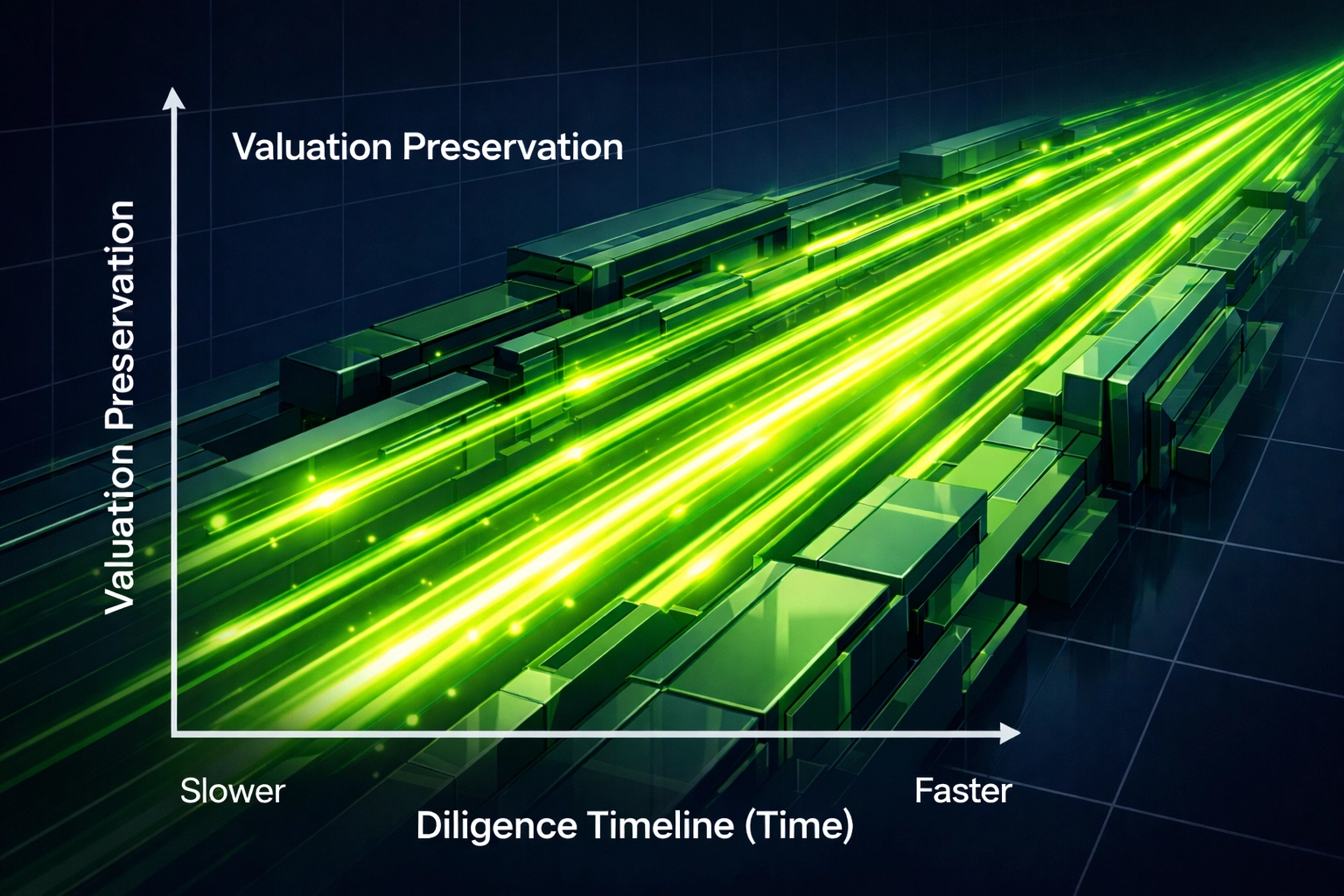
In M&A, time is the enemy of all deals. Transaction velocity: the speed at which a deal moves from inception to closing: is a primary driver of valuation preservation. A high-velocity deal maintains competitive tension and keeps the buyer focused on the strategic benefits of the acquisition rather than searching for reasons to discount the price.
An institutional-grade data room is the engine of transaction velocity. When a buyer asks a complex question and receives a comprehensive, well-indexed response within hours, the narrative remains one of professional excellence. This responsiveness keeps the buyer’s diligence team on their heels and reinforces the premium valuation.
Conversely, when a seller takes weeks to produce basic schedules or tax returns, the momentum dies. Each delay creates a vacuum that the buyer fills with doubt. To understand the structural elements that drive these outcomes, reviewing the factors that influence valuation multiples is essential for any owner approaching an exit.
Cognitive Fatigue and Analytical Errors
The diligence process requires the review of thousands of pages of complex financial, legal, and operational data. When this information is presented in a fragmented or disorganized manner, it leads to cognitive fatigue among the deal teams. I have sat across from buyers long enough to see fatigued analysts make avoidable mistakes that can change the course of a transaction.
If a buyer's analyst misinterprets a poorly labeled financial statement, they may flag a non-existent issue as a major risk. Correcting these "ghost risks" requires additional time, legal fees, and executive attention. Even if the error is eventually clarified, the damage to the deal's momentum has already been sustained.
Analytical errors induced by fatigue can also lead to post-close disputes. If the data room was so chaotic that certain liabilities were not clearly delineated, the buyer may pursue indemnification claims after the transaction. A professionalized approach to documentation minimizes these tail risks and ensures a cleaner exit for the founder.
Building an Institutional-Grade Data Room
A sophisticated data room is not merely a cloud storage folder. It is a curated repository that tells the story of the company’s value through a clinical, evidence-based lens. In practice, the best data rooms do two things at once: they answer buyer questions quickly and they control the narrative around quality, repeatability, and risk. That work starts well ahead of a live process, when data discipline can still translate into measurable valuation lift instead of reactive cleanup under live-deal pressure.
Key components of an institutional-grade data room include:
- Logical Indexing: Documentation must be categorized by function: Financial, Legal, HR, Operations, and Intellectual Property: using a standardized numbering system.
- Real-Time Accessibility: Stakeholders must have immediate access to required files without waiting for manual permissions or email attachments.
- Version Control: Ensuring that the latest versions of contracts and financial statements are the only ones visible avoids confusion and contradictory data.
- Activity Tracking: Monitoring which documents the buyer is reviewing allows the seller’s advisors to anticipate questions and prepare responses in advance.
Preparation quality directly correlates with the final purchase price. Sellers who treat the data room as an afterthought frequently experience the red flags that kill deals during the most sensitive phase of the negotiation.
Protecting the Bottom Line from Information Friction
Information friction is the hidden tax on unorganized businesses. It manifests as higher legal fees, extended accounting hours, and ultimately, a lower net proceed at closing. When a data room is "messy," the cost of the transaction increases exponentially as advisors bill hours to locate and format basic information.
Beyond the direct costs, the opportunity cost is staggering. Every hour a CEO spends digging for an old lease agreement is an hour not spent driving the revenue that supports the valuation. In many cases, the value lost to management distraction during a prolonged diligence period exceeds the cost of hiring professional exit strategists to organize the data room correctly from the start.
To avoid the "Value Gap" caused by poor preparation, owners must view data organization as a core strategic function. A business that is "due diligence ready" at all times is inherently more valuable and more sellable than one that must scramble to assemble its records under the pressure of a live deal.
Strategic Preparedness as a Competitive Advantage
In a competitive bidding environment, the speed and quality of your data room can be the deciding factor between two comparable offers. Strategic buyers and private equity firms prefer targets that demonstrate high levels of internal governance. A pristine data room signals that the company is ready for the next level of institutional ownership.
By eliminating the friction associated with diligence, you remove the buyer’s primary excuses for price adjustments. You maintain leverage in the negotiation, allowing you to push back on unreasonable requests and hold the buyer to their original Letter of Intent terms. Strategic exit planning is the process of building this value long before the transaction begins. It involves identifying the ceiling on your enterprise value and systematically removing the constraints that would otherwise lead to re-trades and deal fatigue.
Application: How to Weaponize Your Data Room
The objective is not to build a prettier folder structure. The objective is to make your business easier to underwrite at a premium. That means organizing financials, legal records, operational reporting, unit-level performance, and key contracts in a way that reduces interpretation risk and accelerates buyer confidence. When the file set is complete, indexed, and decision-ready, you control tempo and protect valuation.
If you want to know where your process will break under diligence pressure, start with ExitMap. It will help identify the gaps that create buyer leverage, delay closing, and compress enterprise value before a deal is live. Start with the assessment here: https://xeadvisors.com/exit-assessment/ This will identify where value is lost before a transaction.