

Tags: exit readiness, owner dependence, valuation drivers, customer concentration, management team depth, strategic planning, succession planning, value growth, business salability
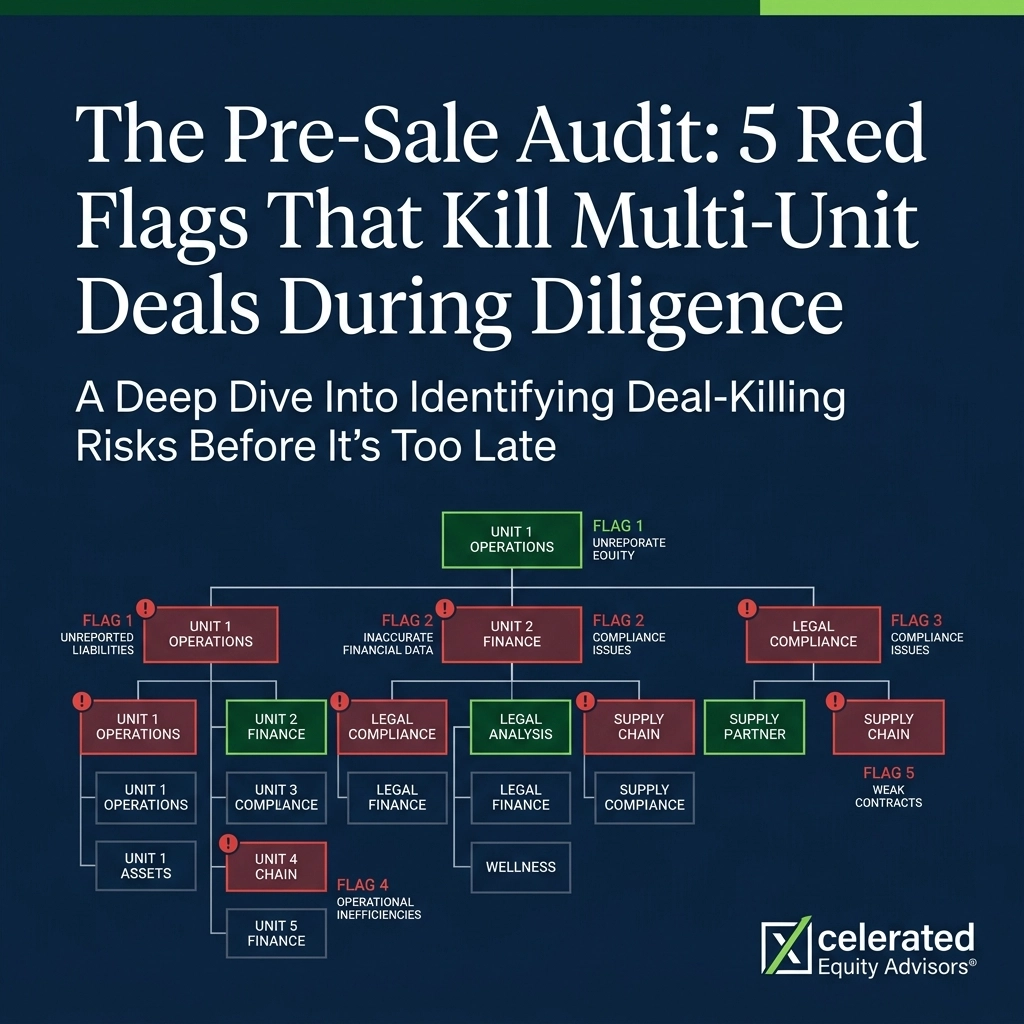
![[HERO] The Pre-Sale Audit: 5 Red Flags That Kill Multi-Unit Deals During Diligence](https://cdn.marblism.com/Wz_MUIf4p09.webp "The Pre-Sale Audit: 5 Red Flags That Kill Multi-Unit Deals During Diligence")
Stop price retrades and deal abandonment by identifying the structural risks buyers use to devalue your business during the due diligence phase.
Most business owners view the Letter of Intent (LOI) as the finish line. In reality, it is the start of a forensic examination designed to find reasons to lower the price. Statistics show that a significant percentage of mid-market deals fail to close after the LOI is signed. Those that do close often face a "re-trade," where the buyer reduces the offer based on risks discovered during due diligence.
Deals do not fail for random reasons. They fail because the seller did not perform a rigorous pre-sale audit to identify and neutralize red flags. To a buyer, a red flag is not just a nuisance. It is a calculated risk that must be offset by a lower purchase price, a larger earnout, or a walk-away decision.
For owners of multi-unit businesses, the complexity of the operation increases the surface area for these risks. A buyer is looking for a scalable asset, not a collection of problematic jobs. If your diligence preparation is lacking, you are essentially handing the buyer a list of reasons to pay you less.
The Misconception: Why Growth Does Not Equal Value
Growth alone does not create value in a diligence process. Buyers do not pay premium multiples for expansion when financial controls, operating systems, and reporting infrastructure remain weak. In a multi-unit business, additional growth can magnify inconsistency, owner dependence, and reporting gaps across a larger footprint.
A larger business with unresolved diligence issues is not automatically more valuable. It is often viewed as a larger integration problem with more risk to underwrite. Buyers pay for durability, transferability, and transparency. When those conditions are absent, growth becomes a reason for a discount rather than a premium.
Capital providers look for signs of "quality of earnings." If your top-line growth is fueled by aggressive or unsustainable tactics, it will be discovered. Due diligence acts as a filter that separates actual enterprise value from temporary revenue spikes. Without a pre-sale audit, you are entering negotiations without a clear understanding of your own vulnerabilities.
1. Inconsistent Unit-Level Financials
What It Is & Why It Matters?
Inconsistent financial reporting across multiple locations is the fastest way to trigger a deep forensic audit. When one unit shows a 20 percent margin and a similar unit shows 12 percent without a clear operational explanation, buyers suspect fraud or gross mismanagement.
How Buyers Detect It:
Buyers perform a side by side comparison of unit-level P&Ls. They look for variances in labor costs, COGS, and discretionary spending. They will reconcile these numbers against bank statements and tax filings to ensure the "normalized EBITDA" you presented is grounded in reality. They also look for sudden revenue spikes immediately preceding the sale.
The Valuation Impact:
Inconsistency suggests a lack of centralized financial control. Buyers will respond by applying a "transparency discount" to your multiple. If they cannot trust the numbers for one unit, they will discount the projected cash flows for the entire enterprise. In extreme cases, they may exclude specific underperforming units from the deal entirely.
2. Owner-Dependent Revenue or Operations
What It Is & Why It Matters?
If the owner is the primary driver of sales or the sole decision-maker for daily operations, the business is not an asset. It is a high-level job. Buyers are purchasing future cash flow that must continue after the owner departs. If that cash flow is tied to the owner’s personal relationships or specialized knowledge, the risk of "post-close collapse" is too high.
How Buyers Detect It:
Sophisticated buyers conduct management interviews and review customer lists. They look for "key man" dependencies in the CRM and organizational charts. They will ask who handles the largest accounts and who makes the final call on operational expenditures. If every road leads back to the CEO, the red flag is raised.
The Valuation Impact:
Owner dependency is the primary driver of heavy earnouts. The buyer will hold back a significant portion of the purchase price, making it contingent on the owner staying for two to three years. They may also demand a lower upfront multiple to compensate for the operational transition risk. You can learn more about moving away from this model by conducting an exit assessment.
3. Lack of Standardized SOPs
What It Is & Why It Matters?
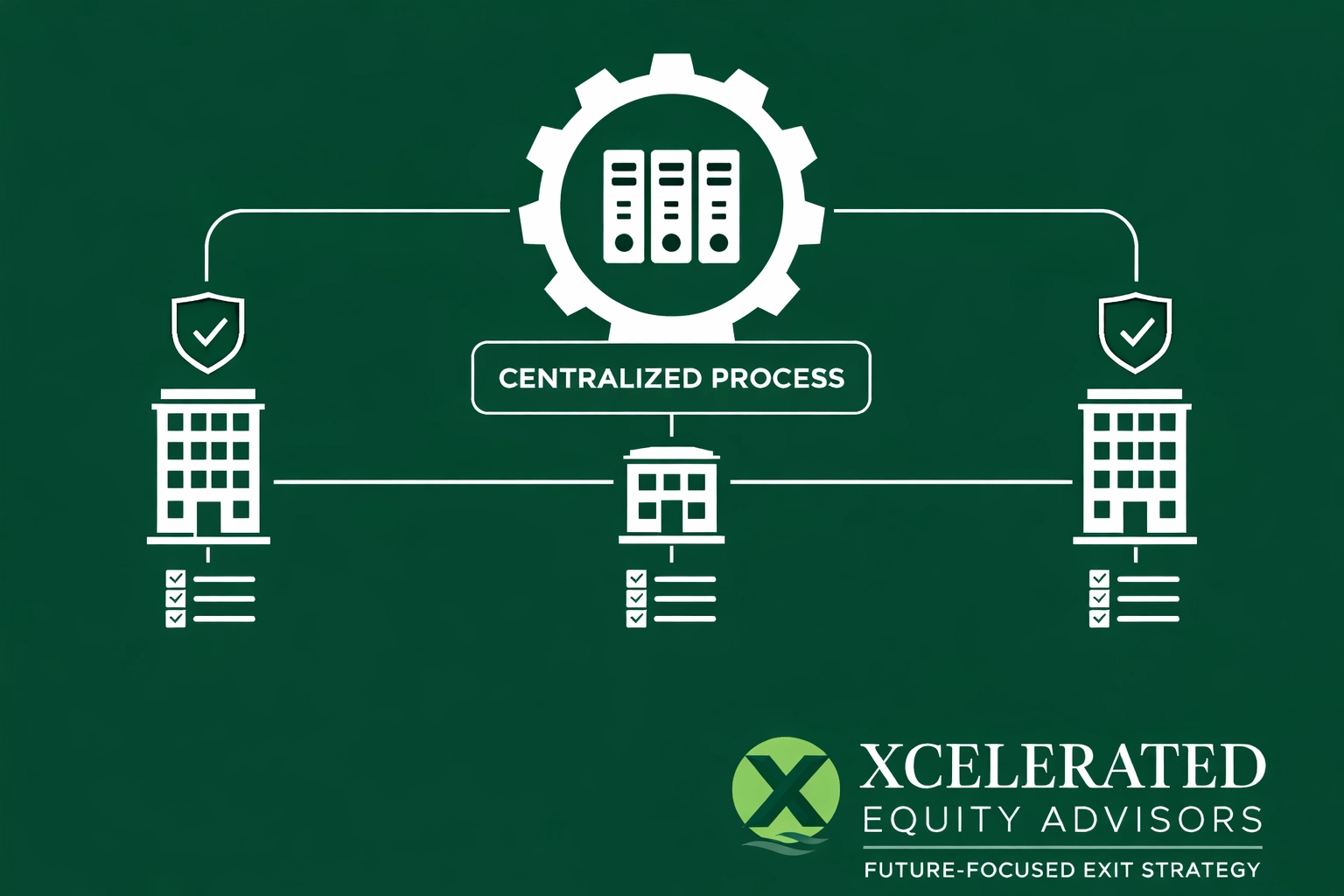
A multi-unit business should operate like a franchise, regardless of whether it is one. If Unit A has a different hiring process than Unit B, the business is not a scalable platform. It is a fragmented group of independent stores. Without documented Standard Operating Procedures (SOPs), the business cannot be easily transitioned to a new owner.
How Buyers Detect It:
During site visits, buyers observe workflows. They will ask mid-level managers for the "playbook" on specific tasks. If the answer is "we just know how to do it" or "it is in my head," the buyer knows the business lacks structural integrity. They will also review employee handbooks and training manuals for completeness.
The Valuation Impact:
Lack of SOPs signifies a high cost of integration. The buyer will have to spend their own capital and time to build the systems you failed to document. This results in a lower enterprise value. Buyers pay a premium for "turnkey" operations; they discount for "fixer-uppers." High employee turnover across units often signals that these missing systems are causing cultural instability.
4. Poor Data Integrity and Reporting Gaps
What It Is & Why It Matters?
Modern buyers are data-driven. They expect real-time access to Key Performance Indicators (KPIs) such as customer acquisition costs, churn rates, and inventory turnover. If your reporting is manual, delayed, or missing key metrics, the buyer assumes you are flying blind.
How Buyers Detect It:
The buyer will request specific data sets during the first week of diligence. If it takes your team three weeks to produce a basic report, or if the data contains obvious errors, your credibility is destroyed. They will look for gaps between your internal dashboard and the actual source data from your POS or ERP systems.
The Valuation Impact:
Bad data creates a "trust deficit." Once a buyer finds one error, they will assume everything else is wrong. This leads to exhaustive "confirmatory diligence" which slows the deal down. Time is the enemy of all deals. The longer it takes to verify the data, the more likely the buyer is to find a reason to walk away. Ensuring exit readiness requires a complete data overhaul long before the sale begins.
5. Customer Concentration or Revenue Fragility
What It Is & Why It Matters?
Revenue is not created equal. If 30 percent of your revenue comes from one client, or if your entire lead flow depends on a single digital platform, your business is fragile. Buyers look for "sticky" revenue that is diversified across a broad customer base.
How Buyers Detect It:
Buyers request a "Top 10" customer report and a revenue-by-source breakdown. They will analyze the length of contracts and the history of price increases. They are looking for signs that a major customer is unhappy or that a market shift could wipe out a large portion of your earnings overnight.
The Valuation Impact:
High customer concentration is a deal-killer for many private equity groups. If they do move forward, they will structure the deal with a massive "clawback" provision. If that major customer leaves within 12 months of the sale, you will lose a portion of your proceeds. Diversified revenue commands the highest multiples in the market.
The Buyer Lens: From Risk to Re-Trade
You must understand that a buyer's primary goal during diligence is risk mitigation. They are looking at your business through a clinical lens. Every red flag identified is translated into a financial adjustment. A professional buyer is looking for reasons to justify a lower entry price to satisfy their internal rate of return requirements.
A "re-trade" occurs when the buyer says, "We offered $10 million based on the information provided, but now that we see the lack of SOPs and the customer concentration, the new price is $7.5 million." This adjustment is rarely up for negotiation because it is based on discovered facts that the seller cannot easily refute during the closing process.
At this stage, the seller often feels trapped. They have already announced the move to their family, and they have spent thousands on legal fees. Most sellers accept the lower price. This is the "valuation trap" that a pre-sale audit is designed to prevent. Identifying these gaps early allows you to fix them while you still hold the leverage.
Key Takeaways for the Executive
- Diligence is a forensic investigation. It is designed to find risk, not to confirm your success.
- Inconsistency equals risk. Standardize your financials and operations across all units to protect your multiple.
- Owner-led is owner-trapped. The more the business needs you, the less a buyer will pay for it.
- Data integrity is non-negotiable. If your reporting is manual or slow, you lose the buyer's trust instantly.
- A pre-sale audit is mandatory. You cannot fix these issues in the middle of a deal. You must address them 12 to 72 months before you go to market.
ExitMap Assessment
Correcting these red flags is not an overnight process. It requires a disciplined approach to value growth. A professional pre-sale audit identifies these exposures while you still have time to fix them. Waiting until you have an LOI in hand to address management depth or financial reporting is a tactical error that leads to price attrition.
By addressing these issues in the 12 to 72 months leading up to an exit, you transform your business from a risky collection of units into a high-value institutional asset. This preparation allows you to dictate the terms of the deal rather than being at the mercy of the buyer's findings. Proper planning creates a competitive environment where multiple buyers vie for a clean asset.
The difference between a successful exit and a failed deal is the willingness to see your business as a buyer sees it. If you wait for the buyer to find the red flags, you have already lost. The audit process is an investment in the final outcome of your life's work. It ensures that the value you have built is the value you actually receive at the closing table.
Do you know how a buyer will view your business?
Take the first step in protecting your valuation. Complete the ExitMap Assessment to identify your specific risk exposures and receive a comprehensive report on your current exit readiness.
Start with the assessment here: https://xeadvisors.com/exit-assessment/ This will identify where value is lost before a transaction.