
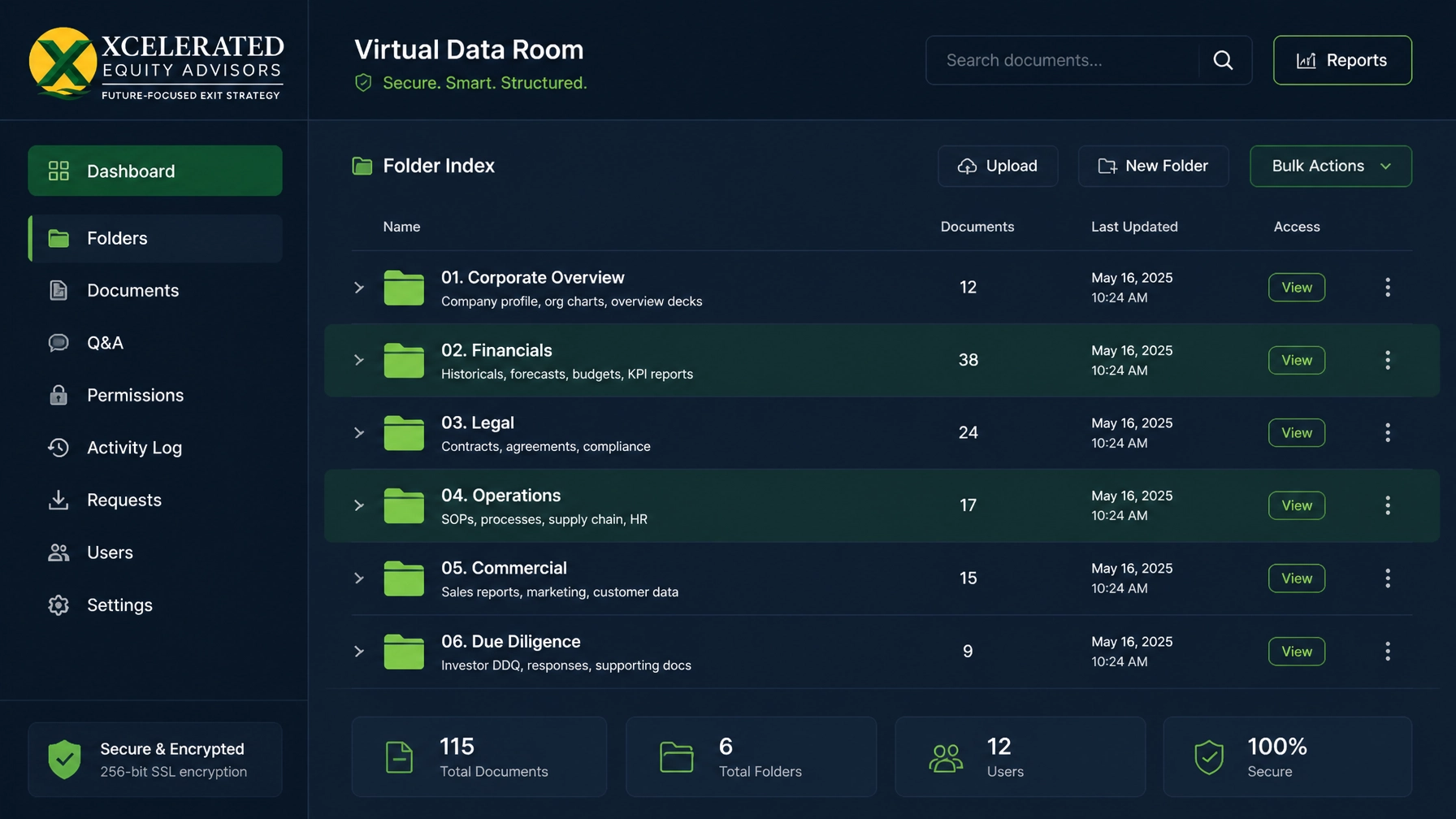

Operational quality is often difficult for an external buyer to quantify during the initial phases of a transaction. Buyers do not underwrite a business based on a clean Virtual Data Room (VDR) alone. They underwrite earnings quality, working capital, contracts, customer concentration, management depth, KPIs, legal exposure, and operational scalability. A clean data room is one signal among many. It shows readiness early. It does not replace the real work of diligence.
The best transactions are won long before the business goes to market. The preparation of your data room should not be a last-minute administrative task. Treat it as a readiness project that reflects operating discipline.
What a Data Room Signals to Buyers
Buyers view your business through the lens of risk and reward. They assume that the way you manage information reflects how you manage people, customers, and capital. A folder structure that mirrors functional departments and operational workflows signals a disciplined management team.
However, many business owners wait until an LOI is signed to begin gathering documents. This reactive approach creates immediate "deal fatigue" and signals a lack of readiness. As a result, buyers may challenge working capital, request more support, or seek additional protections.

Hidden Risks of Poor Indexing
A disorganized index creates more than just a headache for the deal team. It invites deeper questioning that can derail a timeline. If a buyer cannot quickly find financial support, reconciliations, customer contracts, or working capital schedules, they begin to question the reliability of the information provided.
The lack of transparency often leads to "re-trading," where the buyer lowers the price mid-diligence. They justify this reduction by citing "execution risk" or "informational asymmetry." Maintaining a buyer-ready data room helps reduce late-stage price adjustments.
Engineering Value in the 12–72 Month Window
Success in a multi-unit or owner-led business exit requires a long-term perspective. Specifically, the 12–72 month window before a buyer is involved is the optimal time to deploy a Value Growth Sprint. During this period, you are not just cleaning files; you are increasing enterprise value before a transaction, not during one.
This window also allows you to implement succession planning and owner-independence work required to reduce founder reliance. When a buyer sees an index populated with standardized SOPs, incentive plans, and clean org charts, they see a more transferable business. That improves buyer confidence and supports a stronger valuation discussion.
Moving from Founder-Reliant to System-Driven Data
Founder-led businesses often house critical information in the owner’s head or in scattered email threads. As a result, the diligence process becomes a bottleneck when the owner is the only person who can answer specific operational questions. This reliance is a serious concern for private equity and strategic buyers alike.
In addition, a professional data room index forces the transition from tribal knowledge to institutional memory. For example, by indexing your exit-ready financials and KPIs, you show that the business is governed by data rather than intuition. This shift supports a stronger valuation outcome.

The Valuation Lift of Diligence Readiness
A well-prepared data room accelerates the time to close. As a result, the business spends less time in the "danger zone" of a pending transaction where external shocks can break a deal. In addition, competitive tension between multiple bidders is easier to maintain when the diligence process is frictionless.
When information is organized, buyers can focus on your future growth narrative rather than your past bookkeeping errors. This allows buyers to spend more time underwriting growth instead of reconciling basic information. A clean index does not create value by itself. It helps buyers see the value that is already in the business.
Operational Decisions That Change Outcomes
Owners should prioritize several operational decisions years before an exit. First, implement a standardized document retention policy across all business units. Second, ensure your working capital adjustments are documented and defensible. Third, build a "shadow" data room today that you update quarterly.
In addition, consider the buyer's perspective on multi-unit operations. They are looking for consistency across locations. An index that clearly delineates P&Ls, lease agreements, and staffing models for every unit shows a scalable platform. This is the difference between selling a collection of businesses and selling a unified enterprise.

Conclusion: The Strategic Exit as a Planned Outcome
A strategic exit is not an event that happens to you; it is a result that you engineer. However, many owners still assume that the investment banker will "fix" the business during the sale process. In reality, the banker can only package what already exists.
The work of organizing your data and refining your operations must happen long before the first NDAs are signed. Treat your data room index as an early signal of operational readiness. Do not mistake it for the source of value. It shows discipline. It helps buyers move faster. It strengthens your position when the real underwriting begins.
Start with the assessment here: https://xeadvisors.com/exit-assessment/ This will identify where value is lost before a transaction.
[…] This is consistent with the discipline described in XEA’s guidance on data room indexing as a proxy for operational quality. […]
[…] Organized evidence matters because it connects the stated process to actual behavior. Approval histories, exception logs, customer records, KPI trends, and operating-review notes give the buyer a clearer view of how the company works under pressure. […]