Skip to content
No results
  • Home
  • Proven 6-Step Exit Planning Process
  • Growth Advisory
  • Client Results
  • Free Exit Assessment
  • Contact
  • About
Xcelerated Equity Advisors - Future-Focused Business Strategy
  • Home
  • Proven 6-Step Exit Planning Process
  • Growth Advisory
  • Client Results
  • Free Exit Assessment
  • Contact
  • About
Xcelerated Equity Advisors - Future-Focused Business Strategy
  • Blogs

Why Strong Businesses Still Receive Discounted Offers

Strong businesses still receive offers below owner expectations. Buyers do not pay for past performance alone. They price the risk that revenue, margin, and leadership continuity weaken after close. When they see concentration, owner dependence, weak working capital control, or…

  • Joseph S Attia, PhD
  • August 11, 2026
  • Blogs

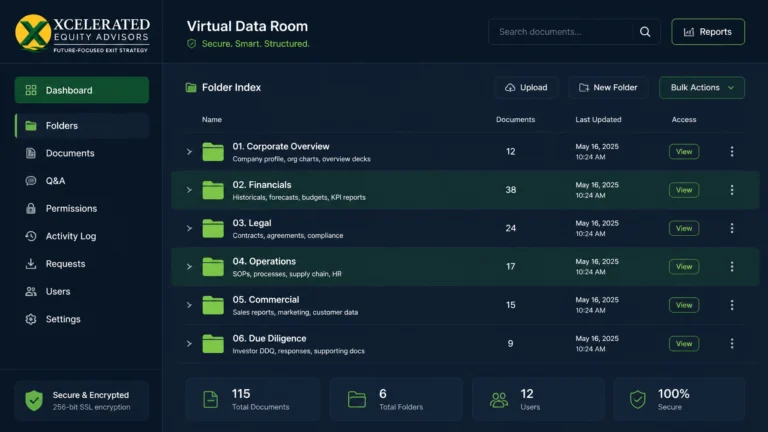
Data Room Indexing as a Proxy for Operational Quality

Operational quality is often difficult for an external buyer to quantify during the initial phases of a transaction. Buyers do not underwrite a business based on a clean Virtual Data Room (VDR) alone. They underwrite earnings quality, working capital, contracts,…

  • Joseph S Attia, PhD
  • August 4, 2026
  • 1 Comment
  • Blogs

The Triple Threat Operator: How to Play, Win, and Retire the Jersey

mlftr3vdtfq

Many multi-unit owners operate as high-level fire-fighters. They spend their energy on labor shortages, supply chain friction, and unit-level crises, believing that operational endurance is the same as value creation. It isn't. To achieve a premium exit, you must move…

  • Joseph S Attia, PhD
  • July 28, 2026
  • 1 Comment
  • Blogs

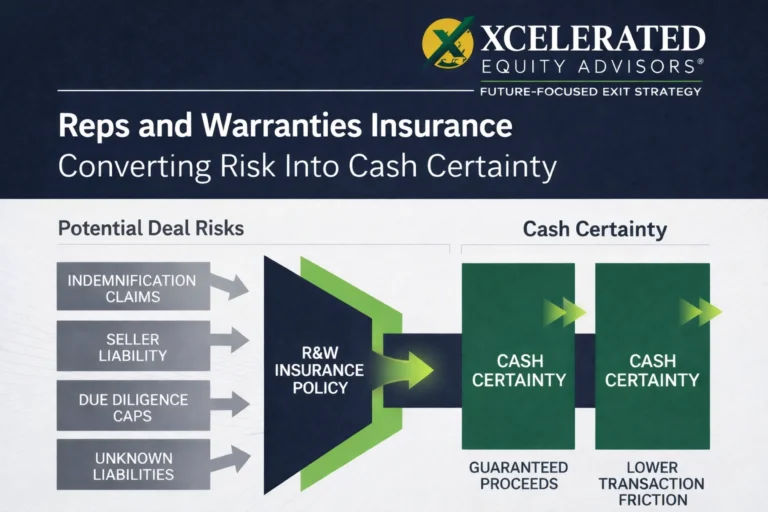
Reps and Warranties Insurance: Analyzing the Trade-off: Liquidity vs. Friction

lbdco0gz6fn

In many lower middle market transactions, sellers will have $1.0 to $2.0 million of proceeds tied up for 24 to 36 months under a traditional indemnity escrow structure. While avoiding a six-figure premium at signing might seem attractive, it often…

  • Joseph S Attia, PhD
  • July 21, 2026
  • Blogs

Purchase Price Allocation: The Tax Liability That Kills Net Cash

xflw8emyun9

I watched a seller lose $640,000 in walk-away cash because they treated the purchase price allocation as a clerical footnote rather than a central deal term. The mistake was allowing the buyer to shift $4 million of the purchase price…

  • Joseph S Attia, PhD
  • July 14, 2026
  • Blogs

Indemnification Escrows: How Buyers Withhold Your Proceeds

tytb0h3noc4

I once watched a seller walk away from the closing table with $1.2 million less in his pocket because he treated the indemnification escrow as a guaranteed payment rather than a contingent holdback. He failed to negotiate the "basket" and…

  • Joseph S Attia, PhD
  • July 7, 2026
  • 1 Comment
  • Blogs

Earn-outs: How Buyers Shift Performance Risk Back to the Seller

k8dp89vx3wb

I watched a seller forfeit a $2.4 million earn-out payment because they failed to negotiate a specific exclusion for centralized corporate overhead in their post-close EBITDA definition. The seller assumed the buyer’s management team would maintain the existing lean cost…

  • Joseph S Attia, PhD
  • June 30, 2026
  • Blogs

The Net Debt Trap: Balance Sheet Definitions That Hit Your Final Check

uroalyqfxct

I recently witnessed a seller lose $840,000 at the closing table because they assumed "debt-free" only applied to their outstanding bank loans. This seller failed to realize the buyer’s definition of debt included accrued employee bonuses and long-term customer deposits…

  • Joseph S Attia, PhD
  • June 23, 2026
  • Blogs

Deferred Revenue and Working Capital: Why Recurring Revenue Reduces Your Proceeds

wwe bdb wnt

Category: Exit Readiness / Valuation Drivers I watched a seller lose $500,000 at closing because the buyer classified deferred revenue as a debt-like liability and subtracted it from the purchase price. The business carried $500,000 in deferred revenue on the…

  • Joseph S Attia, PhD
  • June 16, 2026
  • Blogs

Quality of Earnings vs Working Capital: Where Value Gets Repriced

d4faefhbgyp

I watched a twelve-location retail owner lose $850,000 at the closing table because the buyer used quality of earnings add-backs to justify raising the working capital peg. The seller successfully argued for $400,000 in owner expense add-backs that increased enterprise…

  • Joseph S Attia, PhD
  • June 9, 2026
  • 1 Comment
Prev
1 2 3 4
Next
  • Exit Planning Insights
  • Privacy Policy
  • Contact

Copyright © 2026 - Xcelerated Equity Advisors®, LLC