
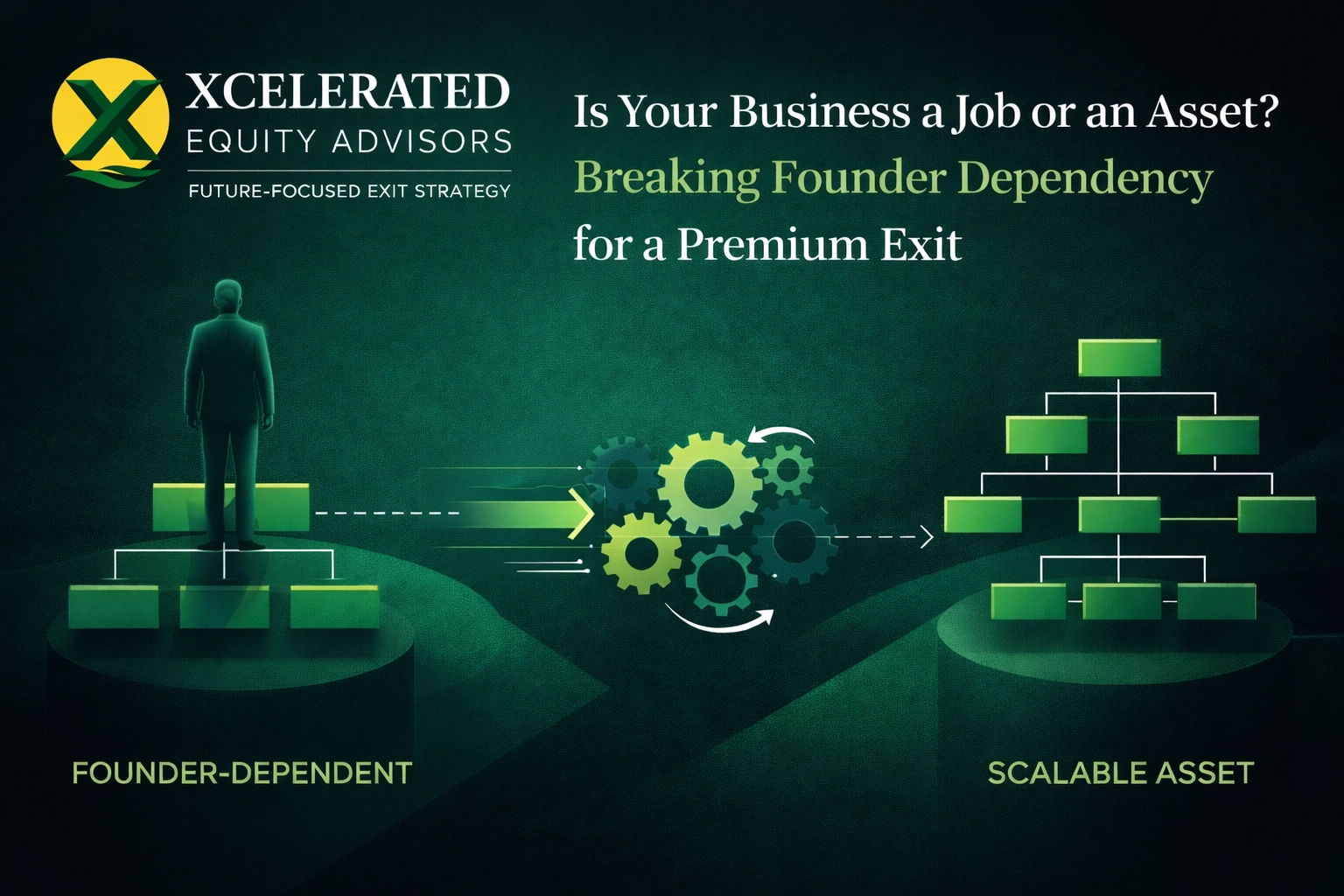

If your business cannot operate without you, buyers will not value it as an asset. Founder dependency is one of the primary reasons businesses trade at discounted multiples or fail to sell altogether. The mandate is clear: increase enterprise value BEFORE a transaction, not during one. Value growth happens through deliberate improvements in transferability, management depth, and operational independence.
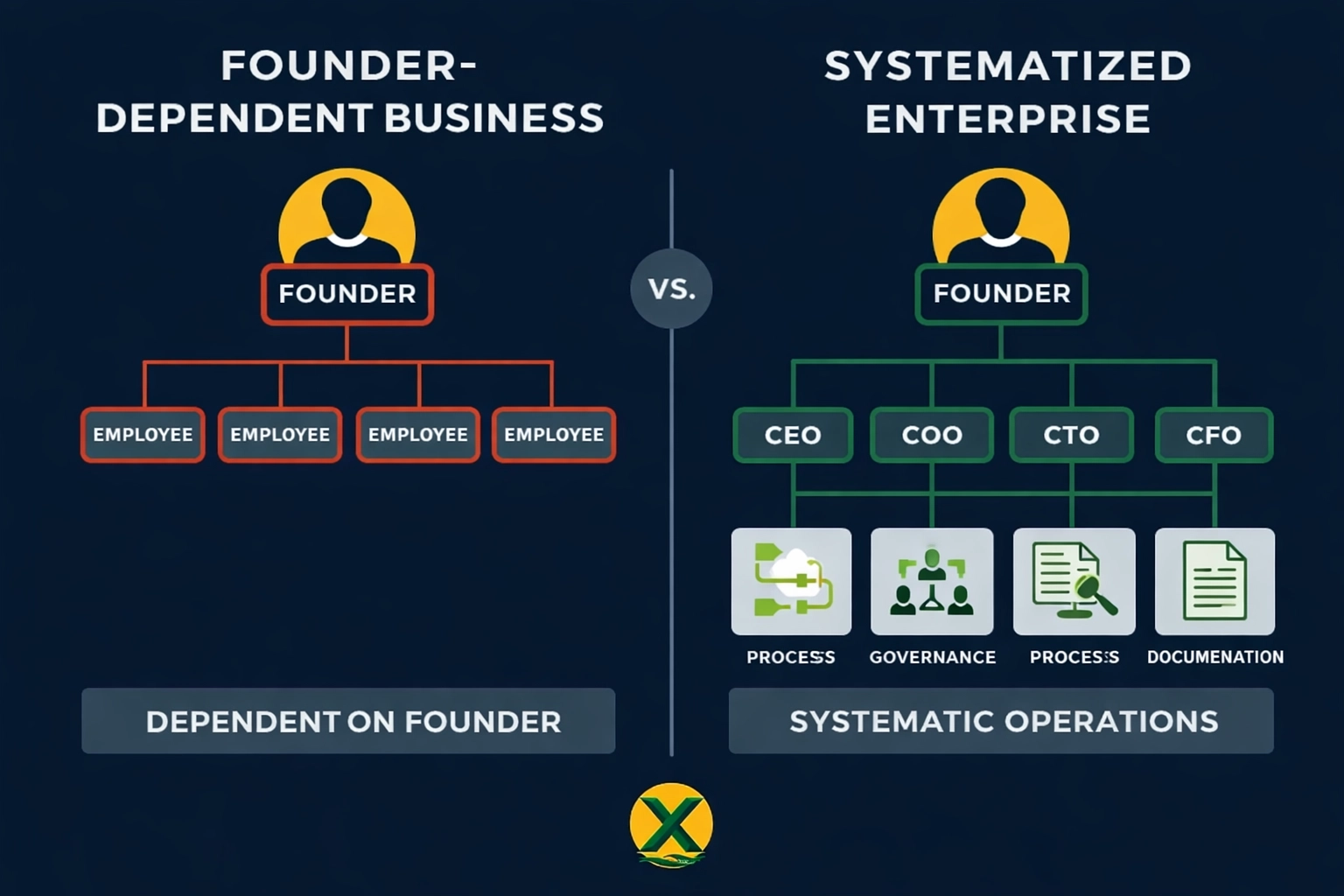
Many business owners mistake income for enterprise value. A company may generate significant profit, but if that profit depends on the founder’s involvement, it is not a transferable asset. It is a job.
For an entity to be considered a transferable asset, it must demonstrate the ability to produce consistent results independent of its creator. Sophisticated buyers, including private equity groups and strategic competitors, prioritize the mitigation of "key man risk." When a business cannot function without its owner, that risk is viewed as a structural defect, leading to heavy valuation discounts or the complete collapse of a deal during due diligence. That is why serious exit planning focuses on increasing enterprise value BEFORE a transaction, not during one, through changes that improve durability, reduce risk, and strengthen buyer confidence.
The Valuation Penalty of Founder Dependency
In the current M&A landscape, owner dependence is one of the most significant detractors of value. Buyers assess a business based on the probability of future cash flows. If the founder is the primary rainmaker, the chief problem solver, or the sole holder of critical industry relationships, the probability of those cash flows continuing post-sale drops precipitously.
This risk is reflected directly in the EBITDA multiple. A systematized, independent business might command a 6x to 8x multiple, whereas an owner-dependent business of the same size may struggle to achieve a 3x or 4x multiple. In many cases, the buyer will insist on an aggressive "earn-out" structure, forcing the founder to remain tethered to the business for years to receive the full purchase price.
Buyers price businesses based on risk-adjusted future cash flow, and founder dependency is one of the most visible and penalized risks in that equation.
What It Is & Why It Matters?
Income is a measure of current performance; Enterprise Value is a measure of future sustainability. Many founders focus exclusively on the former, optimizing for short-term tax advantages and personal draws. However, professional exit planning for business owners requires a shift in focus toward building equity that can be harvested. That work must happen BEFORE a transaction, not during one. Operational improvements, management development, and systemization are what convert current income into higher enterprise value.
A business that generates $2 million in annual profit but requires the owner to work 60 hours a week is often less valuable than a business generating $1.5 million where the owner acts purely in a board-level capacity. The latter represents a turnkey investment. The former represents a liability that the buyer must spend additional capital to fix by hiring expensive executive replacements.
The Misconception: Why Growth Does Not Equal Value
Growth alone does not create enterprise value. If revenue expansion is tied directly to the founder’s personal involvement, the business becomes larger without becoming more transferable. Buyers do not reward growth that increases operational fragility.
A founder-dependent company can add locations, customers, or headcount and still remain structurally weak. If decision-making, customer retention, and problem resolution continue to flow through one person, scale simply amplifies key man risk. In diligence, that dynamic lowers confidence in the durability of future cash flow. Growth without transferability increases complexity without increasing value.
Identifying Critical Points of Failure
Founder dependency often disguises itself as "hands-on leadership." To transition toward a premium exit, owners must perform a clinical ExitMap Assessment to identify these critical points of failure:
- Centralized Decision-Making: Every operational, financial, or HR decision requires the founder's final approval, creating a permanent bottleneck.
- Relationship Monopolies: The founder is the primary point of contact for the top 20% of customers or the most critical vendors.
- Knowledge Silos: Core processes, historical data, and "how things are done" exist only in the founder’s head rather than in documented systems.
- Lack of Management Depth: The secondary layer of leadership lacks the authority or the skill set to execute the company's strategic plan without daily guidance.
A Framework for Reducing Founder Dependency
Breaking the cycle of dependency is not an overnight task; it is a deliberate process of institutionalizing excellence. By engaging in targeted growth advisory work, owners can systematically transfer the "value" from themselves to the organization. This is the core discipline of increasing enterprise value BEFORE a transaction, not during one. Buyers reward these changes when they see repeatability, accountability, and reduced dependence on the founder.
1. Delineate and Decentralize Decision Rights
The first step is to categorize every decision made within the company and delegate them. This involves moving from a "permission-based" culture to an "outcome-based" culture. When employees are given the authority to make decisions within defined parameters, the business develops its own operational rhythm.
2. Institutionalize Specialized Knowledge
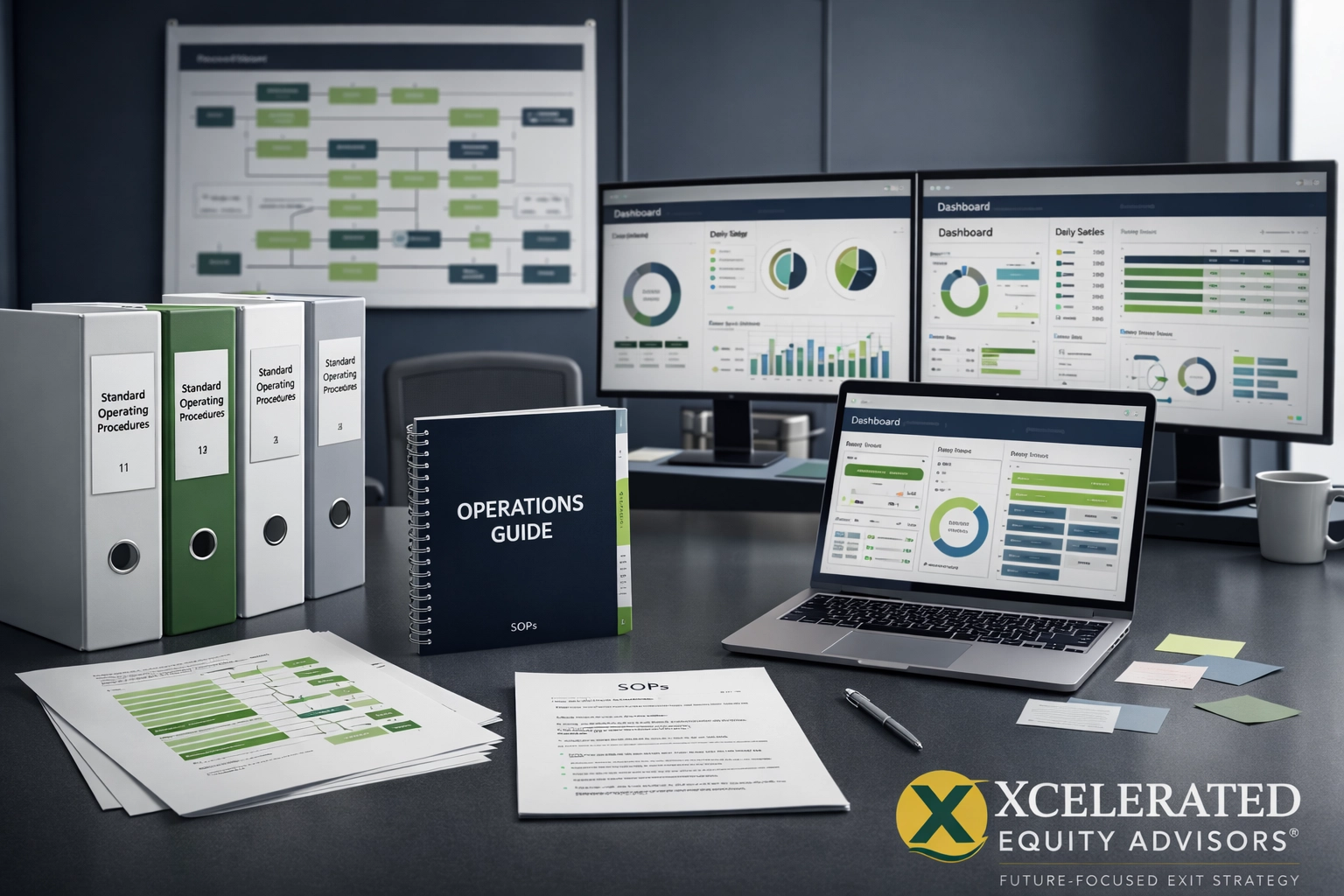
Buyers look for a "Playbook." Every critical function: from lead generation to service delivery: must be documented, tested, and refined. This documentation proves to a buyer that the company’s success is a result of a repeatable system rather than the founder’s individual brilliance.
3. Cultivate Management Depth and Accountability
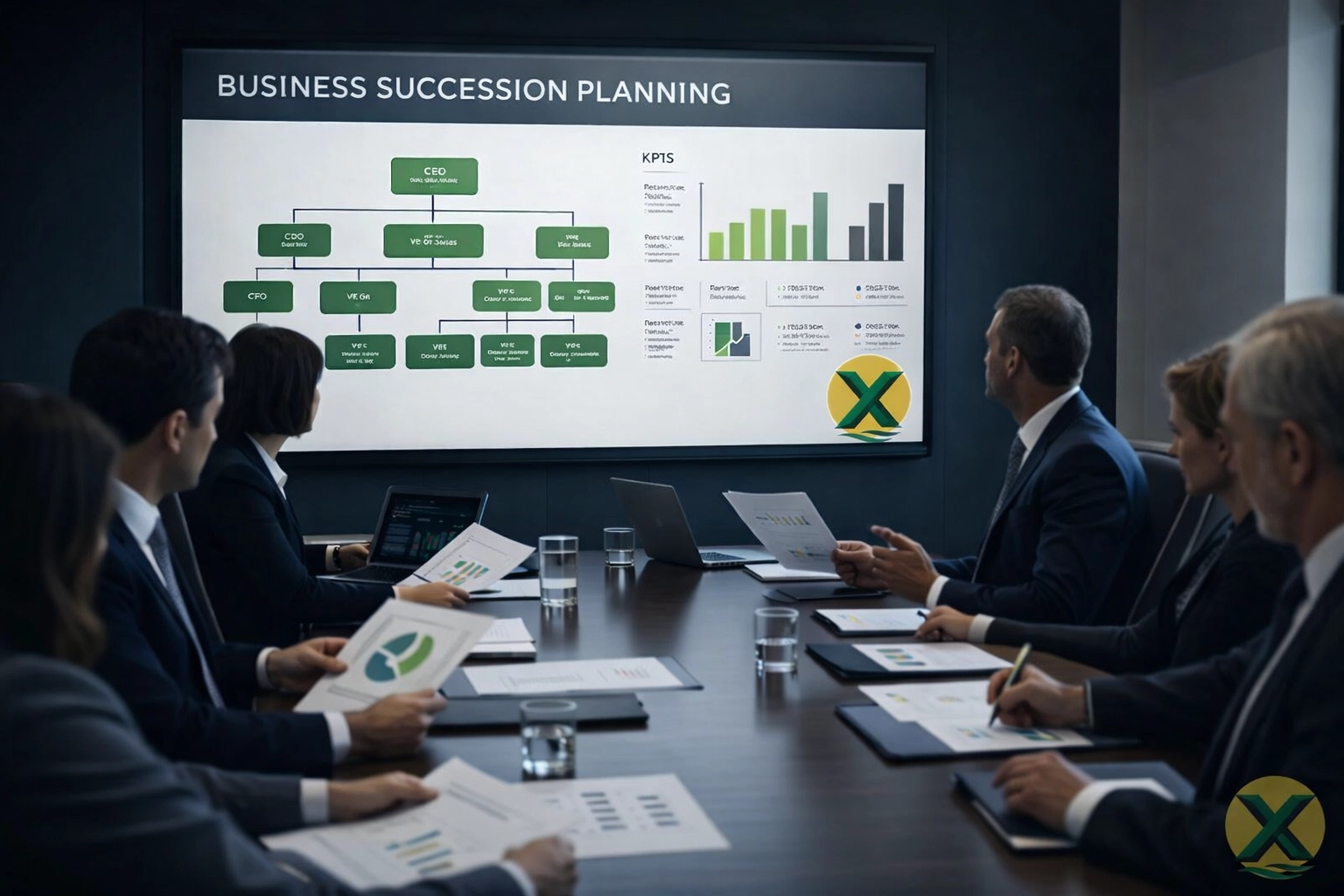
A premium valuation is often a reflection of the strength of the management team. Investors are not just buying a company; they are buying the people who run it. Developing a secondary leadership tier that can manage the P&L and drive growth is the most effective way to de-risk the asset.
4. Diversify Customer and Vendor Interfaces
If a customer stays with the company because they "like the owner," that relationship is not transferable. The sales process must be institutionalized, and account management must be handled by a team. This ensures that the revenue stream remains stable regardless of who sits in the CEO chair.
The Role of Business Succession Planning
Effective business succession planning is not just about choosing a successor; it is about building a business that is "successor-ready." Whether the eventual exit is to a family member, a key employee, or an outside third party, the requirements for a high-value transfer remain the same: transparency, stability, and independence. Those conditions are established BEFORE a transaction, not during one, and they are what turn successor readiness into valuation readiness.
An experienced business exit strategy consultant provides the external perspective necessary to identify dependency risks that the founder may be too close to see. By treating the business as a product to be sold rather than a place to work, the founder can begin making the structural changes necessary to command a premium multiple.
Key Takeaways
- Founder dependency is a direct valuation discount.
- Buyers pay for transferable systems, not founder effort.
- Income does not equal enterprise value.
- A business that requires the owner is not a scalable asset.
Conclusion: Preparing for the Ultimate Transaction
The transition from "Owner-Operator" to "Strategic Chairman" is the most profitable move a founder can make. It simultaneously reduces personal stress and increases the eventual sale price of the company. A business that can run without you is a business that everyone wants to buy. That outcome is achieved by increasing enterprise value BEFORE a transaction, not during one, through disciplined value growth that buyers can verify.
The path to a premium exit begins with a cold, hard look at your current operational structure. If you were to step away for 90 days, would the business grow, stagnate, or collapse? Your answer to that question determines whether you are building an asset or simply maintaining a job.
Exit Readiness Assessment
Understand your current exit readiness and identify the specific valuation risks in your business.
Curious about your specific level of owner dependency? Take the 10-minute Owner Centricity Quiz to see how much of the business value is currently tied to you personally.
Tags: exit readiness, owner dependence, valuation drivers, customer concentration, management team depth, strategic planning, succession planning, value growth, business salability
Start with the assessment here: https://xeadvisors.com/exit-assessment/ This will identify where value is lost before a transaction.