
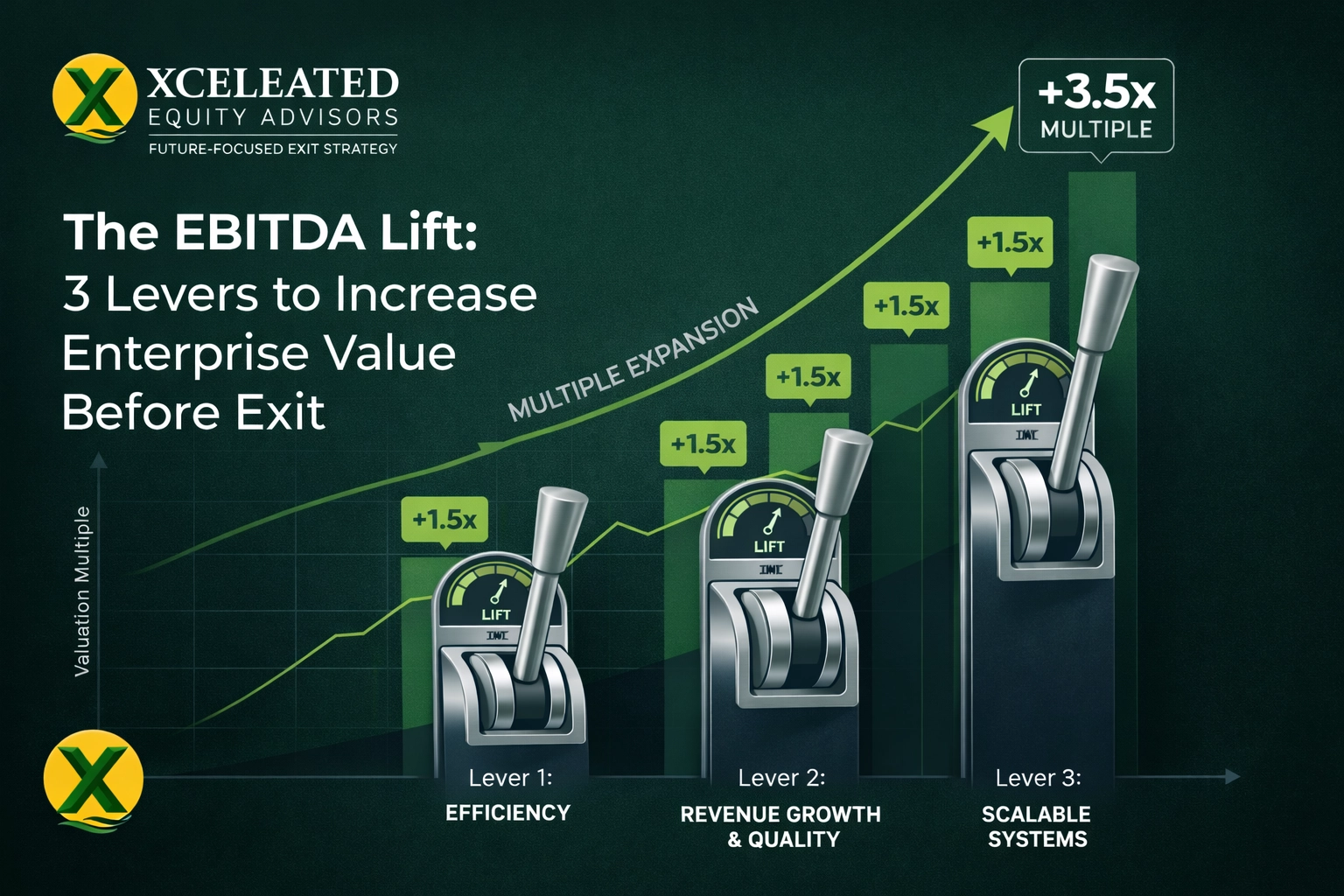

Driving Enterprise Value Through Strategic Operational Improvements
Most owners preparing for exit are tracking the wrong number. Revenue is satisfying to grow and easy to report, but buyers do not price your business on revenue. They price it on EBITDA – and more precisely, on how durable, transferable, and predictable that EBITDA actually is.
I have been through three exits and seen this pattern more than once: a founder grows the top line aggressively in the two years before sale, then is surprised when the buyer’s offer reflects a modest multiple. The business got bigger. The multiple did not move. In some cases, it compressed.
The reason is straightforward. Revenue growth without margin discipline, cost control, and revenue quality creates risk, not value. A buyer is purchasing a future cash flow stream. If that stream looks unstable or founder-dependent, the multiple shrinks to price in the uncertainty.
Multiple expansion – where a controlled improvement in EBITDA produces a disproportionately large gain in enterprise value – only happens when buyers see earnings that are reliable, scalable, and not contingent on the owner’s continued involvement. These three levers build that case directly.
The Misconception: Why Growth Does Not Equal Value
Why Growth Without Quality Creates a Value Gap
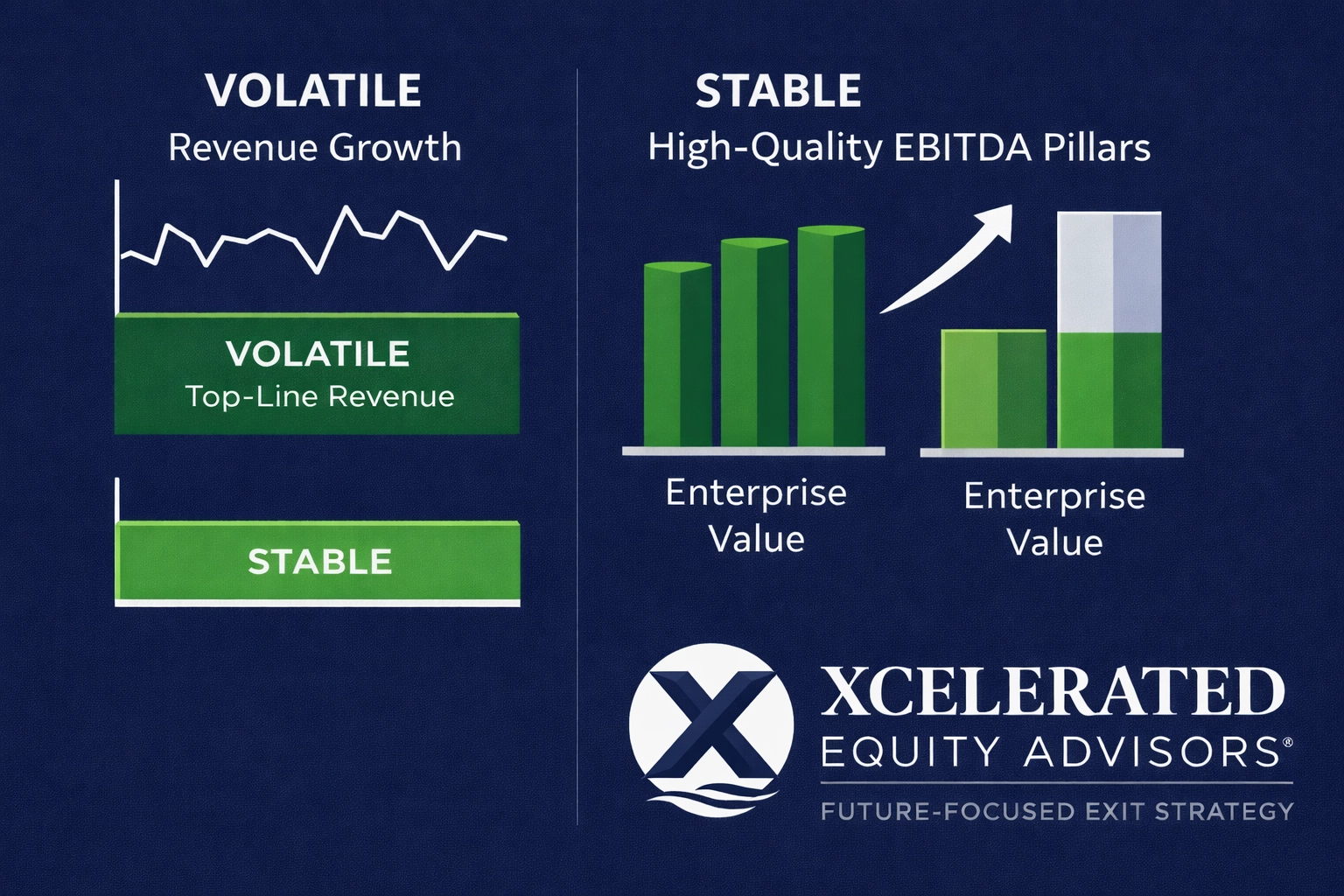
Growth alone is not value unless it produces durable EBITDA, stronger transferability, and lower buyer risk. Buyers do not pay a premium for revenue volume by itself. They pay for earnings quality, margin durability, and a business model that scales without breaking.
When a company scales inefficiently, it produces a disorganized P&L that requires significant normalization during diligence. Buyers discount unstable EBITDA because it represents execution risk. And the risk premium they apply comes directly out of your final number.
More importantly, growth without a systems-based foundation creates a Value Gap. The business gets bigger but less transferable. Complexity rises faster than infrastructure. Decision-making stays concentrated with the owner. Key relationships remain dependent on founder involvement. From a buyer’s perspective, that is not scalable growth – it is expanded owner dependency. And expanded owner dependency suppresses both buyer confidence and valuation multiples.
Lever 1: Pricing Power and Margin Expansion
In every exit I have been part of, pricing discipline separated businesses that looked busy from businesses that looked valuable. Buyers do not reward discounting disguised as growth. They reward margin resilience that can be explained, defended, and repeated after the owner is gone.

What It Is & Why It Matters?
Pricing power is not the ability to push through arbitrary increases. It is the ability to align price with delivered value while holding volume, retention, and gross margin in an acceptable range. Therefore, when a buyer sees consistent price realization, they see evidence of positioning strength, customer stickiness, and earnings durability.
How to implement
Start with a pricing audit by product line, customer segment, and channel. Identify where discounting has become habitual and where value delivery has outpaced your current rate card. Then move from cost-plus pricing to value-based pricing so the commercial model reflects outcomes delivered rather than internal cost build-up.
In addition, standardize packaging, scope, and commercial terms. The goal is to make pricing a managed system instead of a series of subjective sales calls. I have seen founders leave substantial EBITDA on the table because too much pricing authority sat with individual reps or local managers who negotiated from instinct instead of policy.
Therefore, institutionalize the pricing model with approval thresholds, annual increase calendars, renewal escalators, and documented exception rules. Buyers assign more value to pricing systems they can inherit than to founder judgment they cannot replicate.
Valuation impact
Every dollar of realized price improvement has an outsized EBITDA effect because it typically requires little incremental overhead. As a result, disciplined pricing power improves both earnings and the credibility of those earnings in diligence.
Lever 2: Cost Structure Optimization
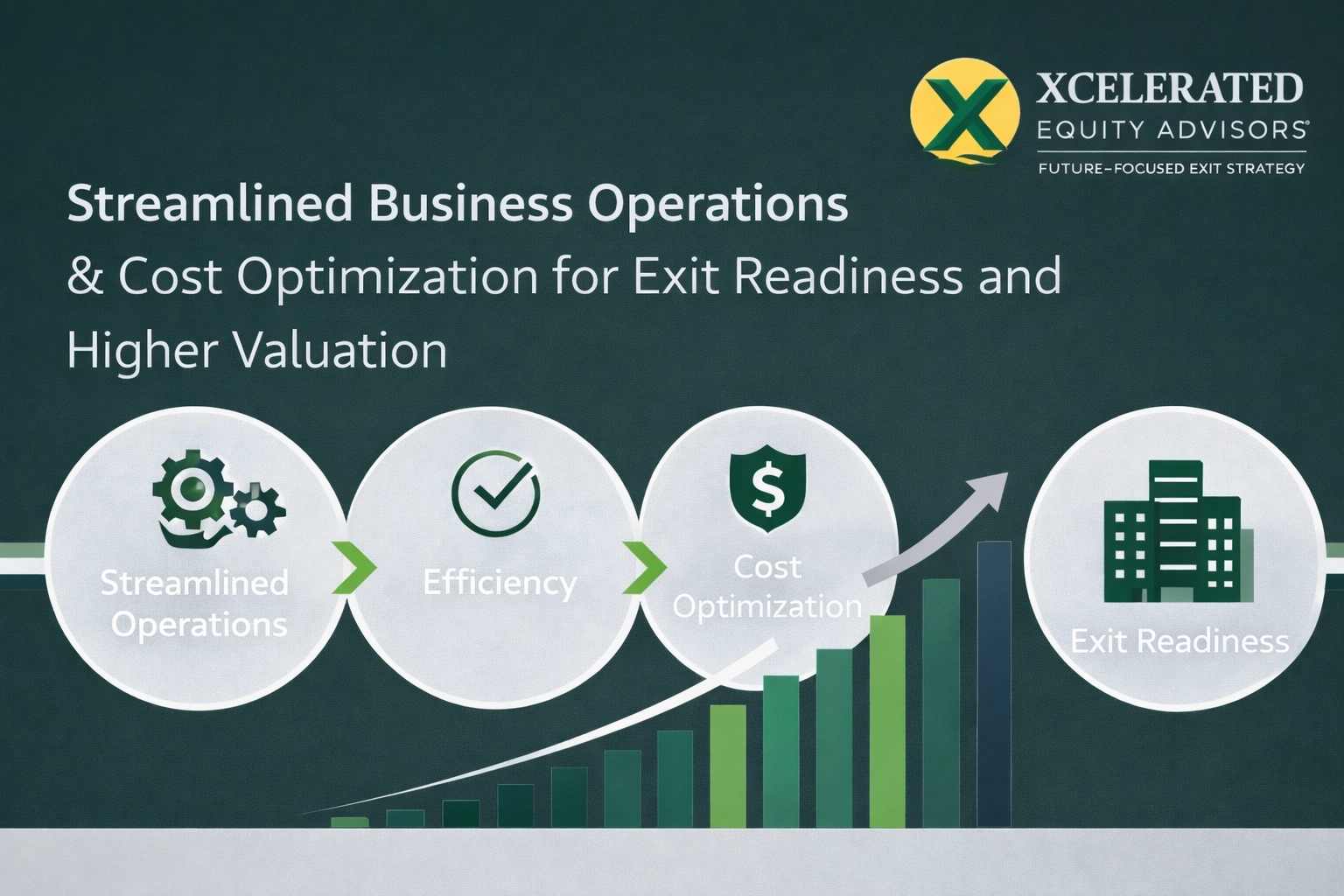
Cost structure work is where operators create EBITDA that buyers can actually underwrite. This is not a blunt cost-cutting exercise. It is a deliberate redesign of how labor, vendors, systems, and support functions scale as the business grows.
What It Is & Why It Matters?
The objective is to eliminate spend that does not strengthen throughput, service quality, or margin. Buyers pay more for businesses with cost discipline because disciplined cost structures signal process maturity, management control, and lower post-close integration risk.
How to implement
First, review labor deployment, scheduling, procurement, software stack overlap, and vendor sprawl. In many businesses, overhead has accumulated faster than operational discipline. Therefore, the right question is not whether a cost exists. The right question is whether that cost produces measurable operating leverage.
I have seen multi-unit businesses carry unnecessary duplicate overhead for years because no one stopped to redesign the support model across locations. For example, HR, payroll, accounting support, and selected administrative workflows are often fragmented by unit when they should be consolidated into a shared-services structure. If you do not capture that EBITDA lift before a buyer does, the buyer will capture it in their underwriting and pay you as if the upside belongs to them.
In addition, renegotiate vendors based on current scale, remove legacy subscriptions, and measure service-line profitability with discipline. If a revenue stream consumes disproportionate labor or support cost, it is not helping value creation even if it inflates reported sales.
Valuation impact
A cleaner cost structure improves EBITDA quality because it shows the buyer the business can grow without expense scaling in lockstep. As a result, operating efficiency becomes transferable value instead of founder-dependent improvisation.
Lever 3: Customer Mix and Concentration Risk
Not all revenue improves value. Buyers distinguish between revenue that produces durable EBITDA and revenue that consumes resources, compresses margins, and increases dependency risk.
What It Is & Why It Matters?
Customer mix determines whether sales convert into quality earnings. Therefore, buyers analyze account profitability, service burden, renewal profile, and concentration exposure. If too much revenue sits in low-margin accounts or operationally disruptive work, the reported top line overstates the true earning power of the business.
Customer concentration remains a separate and material issue. When one customer represents more than 10 to 15 percent of total revenue, buyers and lenders treat the income stream as fragile. If one account exceeds that threshold, the business can become effectively un-bankable for debt-funded buyers. That reduces financing options, narrows the buyer universe, and limits multiple expansion.
How to implement
Segment the customer base by margin, service intensity, retention pattern, and strategic fit. Then reprice, redesign, or exit accounts that consume disproportionate resources relative to contribution. In addition, direct sales and account management capacity toward customers that improve mix rather than simply add volume.
At the same time, map concentration by customer, location, and contract structure. If exposure is too high, execute a diversification plan before launch. That can include winning more mid-sized accounts, expanding channels, tightening contract terms, and reducing reliance on any single relationship.
Valuation impact
Buyers pay more for revenue bases that are profitable, diversified, and financeable. As a result, stronger mix and lower concentration produce broader buyer interest, better lender support, and a more defensible multiple.
The Math of Multiple Expansion
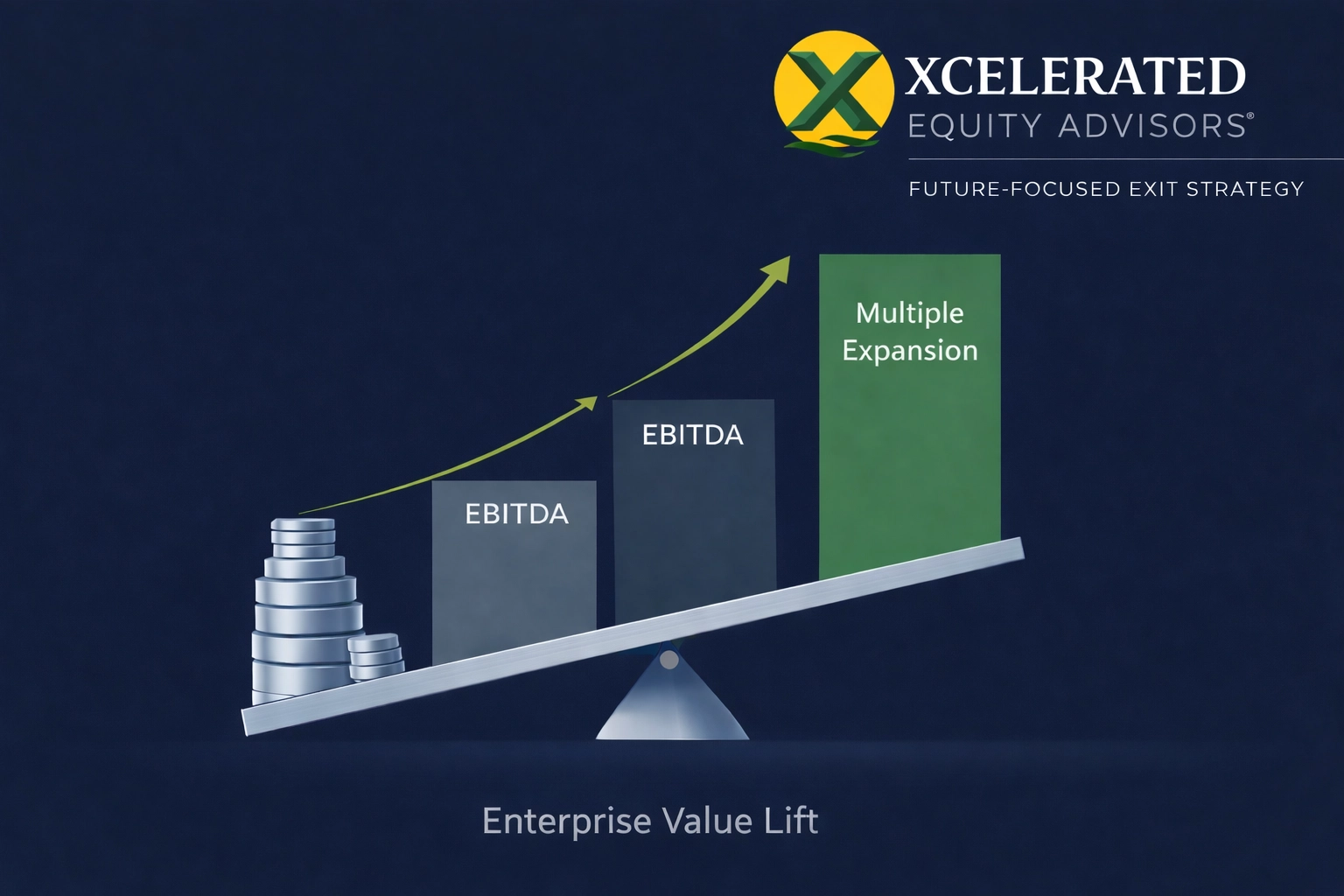
To understand the power of these levers, you must look at the math. Enterprise value is typically calculated as EBITDA multiplied by a valuation multiple. Small improvements in the numerator (EBITDA) and the multiplier (the multiple) create a compounding effect.
Consider a business with $1,000,000 in EBITDA and a 4.0x multiple. The enterprise value is $4,000,000.
By applying the three levers above, the owner achieves a 20 percent lift in EBITDA through better pricing and cost control. The EBITDA is now $1,200,000.
Because the business is now more efficient, has better customers, and higher margins, a buyer views it as less risky. The multiple expands from 4.0x to 5.5x, resulting in a new enterprise value of $6,600,000.
In this scenario, a 20 percent increase in EBITDA resulted in a 65 percent increase in total value. This is the “lift” that occurs when you focus on the quality of the business rather than just the volume of the sales. This leverage is the primary objective of any strategic exit strategy.
Key Takeaways
- EBITDA is the anchor: Buyers value cash flow, not revenue.
- Multiple expansion is the goal: Improving business quality increases the multiplier.
- Pricing is the fastest lever: Margin expansion goes straight to the bottom line.
- Efficiency builds trust: Optimized cost structures reduce buyer perception of risk.
- Customer quality matters: High-margin, loyal clients drive predictable future earnings.
- Compound results: Small operational wins lead to massive valuation gains.
Application: Value Growth Sprints
Increasing the value of a business is not an overnight event. It requires a disciplined approach over a 12 to 72 month window. At Xcelerated Equity Advisors®, LLC, we utilize value growth sprints to focus on these levers in manageable phases.
Each sprint is designed to target a specific area of the business. We audit the current state, implement the necessary changes, and then measure the impact on the valuation. This scientific approach ensures that your efforts are directly tied to the final exit outcome.
Sprints allow management to focus on one objective at a time without disrupting daily operations. This incremental improvement build-up results in a business that is not only more valuable but significantly easier to manage.
Waiting until you are ready to sell to fix these issues is a mistake. By the time you engage a broker, your historical data is already set. You must start optimizing your EBITDA now to ensure that your trailing twelve months of performance reflect a high-value, high-multiple business.
Exit Readiness Assessment
The market does not reward effort. It rewards transferable EBITDA, disciplined operating infrastructure, and a business model a buyer can scale with confidence.
If pricing remains inconsistent, overhead remains fragmented, or customer concentration remains unresolved, those issues will surface in diligence and convert directly into a lower valuation, a narrower buyer pool, or harder deal terms.
Start with the assessment here: https://xeadvisors.com/exit-assessment/ This will identify where value is lost before a transaction.
Tags: exit readiness, owner dependence, valuation drivers, customer concentration, management team depth, strategic planning, succession planning, value growth, business salability